We are JAAS Supplies A Full Range Of Duplex 2205 Fasteners, Duplex Steel Fixings, Duplex 2205 Hex Bolts, Duplex Stainless Steel Fasteners, Duplex Bolts S31803 At best price In India.
Duplex stainless steels are called “duplex” because they have a two-phase microstructure consisting of grains of ferritic and austenitic stainless steel. The picture shows the yellow austenitic phase as “islands” surrounded by the blue ferritic phase. When duplex stainless steel is melted it solidifies from the liquid phase to a completely ferritic structure. As the material cools to room temperature, about half of the ferritic grains transform to austenitic grains (“islands”). The result is a microstructure of roughly 50% austenite and 50% ferrite.
Duplex stainless steel was developed in Sweden in 1930, but commercial production didn’t commence until the 1970s due to the very complicated process of its production. There has been a re-emergence in the steel in modern times after significant advances in steelmaking techniques have made it easier to produce it. However, they are still a relatively under-utilized group of stainless steels, with the world’s usage only between 1 – 3% due to the limitations of their application.
We are the biggest producers for bigger diameter bolts and nuts in India, as our name suggests we are manufacturing big bolts and nuts in Duplex steel grades in the under mentioned table.
We manufacture duplex steel bolts as per grade Alloy 2205, DUPLEX steel is a mix of Austenite and Ferratic steel microstructure, which is why they are also known as Duplex steel. They also have great resistance to corrosion and have higher strength as compared to stainless steel grades like 316 or 304.
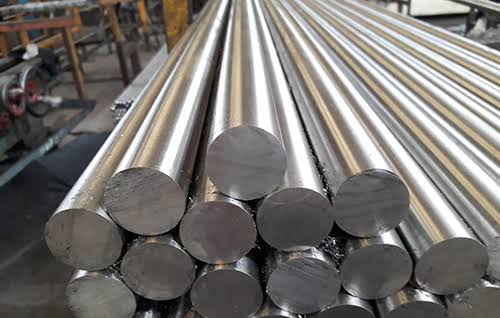
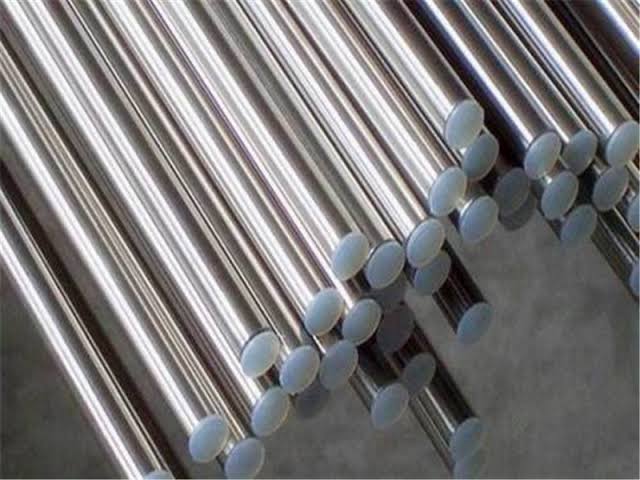
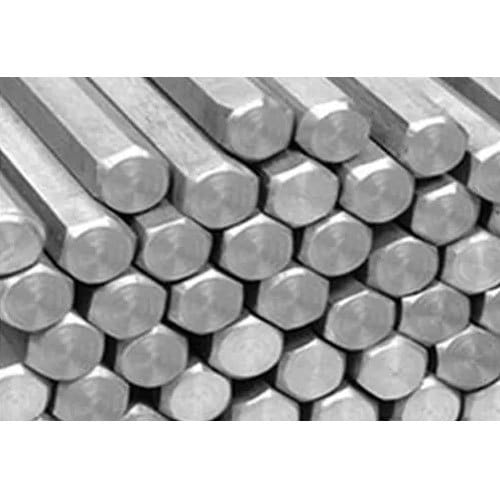
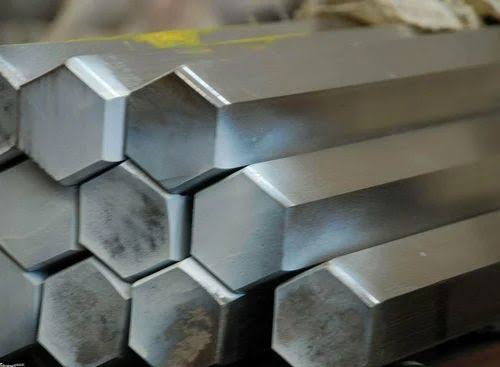
We have in house storage of Hex & round Duplex Steel bars as per customer item required.
- The properties of duplex stainless steel
The microstructure of duplex stainless steels features both the crystallographic structures of approximately 50% ferrite (a body-centred cubic structure) and 50% austenite (a face-centred cubic structure). Both of these phases co-exist as a stable mixture, unlike two-phase alloys, where one of the two phases manifests as precipitates. The alloying elements in duplex stainless steels are either ferritisers (e.g. chromium, silicon, molybdenum) or austenitisers (e.g. carbon, nickel, nitrogen), which means they favour the formation of the ferritic and austenitic phases, respectively.
Properties of selected heat treated duplex steel grades (all values taken at 20 °C).
ASTM A789 Grade S32520 Heat-Treated |
ASTM A790 Grade S31803 Heat-Treated | ASTM A790 Grade S32304 Heat-Treated | ASTM A815 Grade S32550 Heat-Treated | ASTM A815 Grade S32205 Heat-Treated | |
| Elastic modulus | 200 GPa | 200 GPa | 200 GPa | 200 GPa | 200 GPa |
| Elongation | 25 % | 25 % | 25 % | 15 % | 20 % |
| Tensile strength | 770 MPa | 620 MPa | 600 MPa | 800 MPa | 655 MPa |
| Hardness, Brinell | 310 | 290 | 290 | 302 | 290 |
| Yield strength | 550 MPa | 450 MPa | 400 MPa | 550 MPa | 450 MPa |
| Coefficient of thermal expansion | 1E-5 1/K | 1E-5 1/K | 1E-5 1/K | 1E-5 1/K | 1E-5 1/K |
| Specific heat capacity | 440 – 502 J/(kg·K) | 440 – 502 J/(kg·K) | 440 – 502 J/(kg·K) | 440 – 502 J/(kg·K) | 440 – 502 J/(kg·K) |
| Thermal conductivity | 13 – 30 W/(m·K) | 13 – 30 W/(m·K) | 13 – 30 W/(m·K) | 13 – 30 W/(m·K) | 13 – 30 W/(m·K) |
- The Grades of duplex stainless steels
Duplex stainless steels are usually divided into three groups based on their pitting corrosion resistance, characterised by the pitting resistance equivalence number, PREN = %Cr + 3.3 %Mo + 16 %N.
Standard duplex (PREN range: 28–38)
Typically Grade EN 1.4462 (also called 2205). It is typical of the mid-range of properties and is perhaps the most used today
Super-duplex (PREN range: 38-45)
Typically grade EN 1.4410 up to so-called hyper duplex grades (PREN: >45) developed later to meet specific demands of the oil and gas as well as those of the chemical industries. They offer a superior corrosion resistance and strength but are more difficult to process because the higher contents of Cr, Ni, Mo, N and even W promote the formation of intermetallic phases, which reduce drastically the impact resistance of the steel. Faulty processing will result in poor performance and users are advised to deal with reputable suppliers/processors. Applications include deepwater offshore oil production.
| Type | Example grades | Composition | PREN | |||
| Cr% | Ni% | Mo% | N% | |||
| Lean | S31500, S32304, S32404 | 20-24 | 1-5 | 0.1-0.3 | 0.1-0.22 | 24-25 |
| Standard | S31803, S32205 | 21-23 | 4.5-6 | 2.5-3.5 | 0.1-0.22 | 33-35 |
| Super-duplex | S32520, S32550, S32750 | 24-29 | 4.5-8 | 2.7-4.5 | 0.1-0.35 | >40 |
| Hyper-duplex | S32707, S33207 | 27 | 6.5 | 5 | 0.4 | 49 |
Duplex stainless steel sub-groups
Lean duplex grades (PREN range: 22–27)
Typically grade EN 1.4362, have been developed more recently for less demanding applications, particularly in the building and construction industry. Their corrosion resistance is closer to that of the standard austenitic grade EN 1.4401 (with a plus on resistance to stress corrosion cracking) and their mechanical properties are higher. This can be a great advantage when strength is important. This is the case in bridges, pressure vessels or tie bars.
Duplex stainless steel applications
Due to the limitations of duplex stainless steels such as poor formability and machinability, in addition to their highly complicated metallurgical process of production compared to ferritic, austenitic and martensitic stainless steels, duplex steels are used mostly for niche applications.
Applications of duplex stainless steels take into account their limitations and advantages, but the major applications require corrosion resistance, such as pitting and crevice corrosion resistance, stress corrosion resistance, fatigue corrosion, abrasion corrosion or resistance to corrosive environments that are acidic or caustic. Some of the common industrial applications are our duplex products used outlined below.
- Paper production Plants
- Desalination Plants
- Oil and Gas Plants
- Construction industry
- Food and Drink Storage Plants
Composition by Weight (%)
| Steel designation | Number | C, max. | Si | Mn | P, max. | S, max. | N | Cr | Cu | Mo | Ni | Other |
| X2CrNiN22-2 | 1.4062 | 0.03 | ≤1.00 | ≤2.00 | 0.04 | 0.01 | 0.16 to 0.28 | 21.5 to 24.0 | – | ≤0.45 | 1.00 to 2.90 | – |
| X2CrCuNiN23-2-2 | 1.4669 | 0.045 | ≤1.00 | 1.00 to 3.00 | 0.04 | 0.03 | 0.12 to 0.20 | 21.5 to 24.0 | 1.60 to 3.00 | ≤0.50 | 1.00 to 3.00 | – |
| X2CrNiMoSi18-5-3 | 1.4424 | 0.03 | 1.40 to 2.00 | 1.20 to 2.00 | 0.035 | 0.015 | 0.05 to 0.10 | 18.0 to 19.0 | – | 2.5 to 3.0 | 4.5 to 5.2 | – |
| X2CrNiN23-4 | 1.4362 | 0.03 | ≤1.00 | ≤2.00 | 0.035 | 0.015 | 0.05 to 0.20 | 22.0 to 24.5 | 0.10 to 0.60 | 0.10 to 0.60 | 3.5 to 5.5 | – |
| X2CrMnNiN21-5-1 | 1.4162 | 0.04 | ≤1.00 | 4.0 to 6.0 | 0.04 | 0.015 | 0.20 to 0.25 | 21.0 to 22.0 | 0.10 to 0.80 | 0.10 to 0.80 | 1.35 to 1.90 | – |
| X2CrMnNiMoN21-5-3 | 1.4482 | 0.03 | ≤1.00 | 4.0 to 6.0 | 0.035 | 0.03 | 0.05 to 0.20 | 19.5 to 21.5 | ≤1.00 | 0.10 to 0.60 | 1.50 to 3.50 | – |
| X2CrNiMoN22-5-3 | 1.4462 | 0.03 | ≤1.00 | ≤2.00 | 0.035 | 0.015 | 0.10 to 0.22 | 21.0 to 23.0 | – | 2.50 to 3.50 | 4.5 to 6.5 | – |
| X2CrNiMnMoCuN24-4-3-2 | 1.4662 | 0.03 | ≤0.70 | 2.5 to 4.0 | 0.035 | 0.005 | 0.20 to 0.30 | 23.0 to 25.0 | 0.10 to 0.80 | 1.00 to 2.00 | 3.0 to 4.5 | |
| X2CrNiMoCuN25-6-3 | 1.4507 | 0.03 | ≤0.70 | ≤2.00 | 0.035 | 0.015 | 0.20 to 0.30 | 24.0 to 26.0 | 1.00 to 2.50 | 3.0 to 4.0 | 6.0 to 8.0 | – |
| X3CrNiMoN27-5-2 | 1.446 | 0.05 | ≤1.00 | ≤2.00 | 0.035 | 0.015 | 0.05 to 0.20 | 25.0 to 28.0 | – | 1.30 to 2.00 | 4.5 to 6.5 | – |
| X2CrNiMoN25-7-4 | 1.441 | 0.03 | ≤1.00 | ≤2.00 | 0.035 | 0.015 | 0.24 to 0.35 | 24.0 to 26.0 | – | 3.0 to 4.5 | 6.0 to 8.0 | – |
| X2CrNiMoCuWN25-7-4 | 1.4501 | 0.03 | ≤1.00 | ≤1.00 | 0.035 | 0.015 | 0.20 to 0.30 | 24.0 to 26.0 | 0.50 to 1.00 | 3.0 to 4.0 | 6.0 to 8.0 | W 0.50 to 1.00 |
| X2CrNiMoN29-7-2 | 1.4477 | 0.03 | ≤0.50 | 0.80 to 1.50 | 0.03 | 0.015 | 0.30 to 0.40 | 28.0 to 30.0 | ≤0.80 | 1.50 to 2.60 | 5.8 to 7.5 | – |
| X2CrNiMoCoN28-8-5-1 | 1.4658 | 0.03 | ≤0.50 | ≤1.50 | 0.035 | 0.01 | 0.30 to 0.50 | 26.0 to 29.0 | ≤1.00 | 4.0 to 5.0 | 5.5 to 9.5 | Co 0.50 to 2.00 |
| X2CrNiCuN23-4 | 1.4655 | 0.03 | ≤1.00 | ≤2.00 | 0.035 | 0.015 | 0.05 to 0.20 | 22.0 to 24.0 | 1.00 to 3.00 | 0.10 to 0.60 | 3.5 to 5.5 | – |
Mechanical properties at room temperature of solution-annealed austenitic–ferritic stainless steels
| 0.2% proof stress, min. (MPa) | Ultimate tensile strength (MPa) | Elongation, min. (%) | ||
| X2CrNiN23-4 | 1.4362 | 400 | 600 to 830 | 25 |
| X2CrNiMoN22-5-3 | 1.4462 | 450 | 650 to 880 | 25 |
| X3CrNiMoN27-5-2 | 1.446 | 450 | 620 to 680 | 20 |
| X2CrNiN22-2 | 1.4062 | 380 | 650 to 900 | 30 |
| X2CrCuNiN23-2-2 | 1.4669 | 400 | 650 to 900 | 25 |
| X2CrNiMoSi18-5-3 | 1.4424 | 400 | 680 to 900 | 25 |
| X2CrMnNiN21-5-1 | 1.4162 | 400 | 650 to 900 | 25 |
| X2CrMnNiMoN21-5-3 | 1.4482 | 400 | 650 to 900 | 25 |
| X2CrNiMnMoCuN24-4-3-2 | 1.4662 | 450 | 650 to 900 | 25 |
| X2CrNiMoCuN25-6-3 | 1.4507 | 500 | 700 to 900 | 25 |
| X2CrNiMoN25-7-4 | 1.441 | 530 | 730 to 930 | 25 |
| X2CrNiMoCuWN25-7-4 | 1.4501 | 530 | 730 to 930 | 25 |
| X2CrNiMoN29-7-2 | 1.4477 | 550 | 750 to 1000 | 25 |
| X2CrNiMoCoN28-8-5-1* | 1.4658 | 650 | 800 to 1000 | 25 |
Duplex SS Fasteners & Components are produced from an alloy that has a high content of chromium and low to moderate content of nickel. The high chromium content in the Duplex Stainless Steel Fasteners & Components gives them high tensile strength along with increased hardness and toughness. Therefore Duplex Stainless Steel Fasteners are less likely to get damaged or deformed and get dented. Another reason for the Duplex Stainless Fasteners having good mechanical properties can be attributed to the mixed, yet balanced austenite and ferrite microstructure present in the alloy.