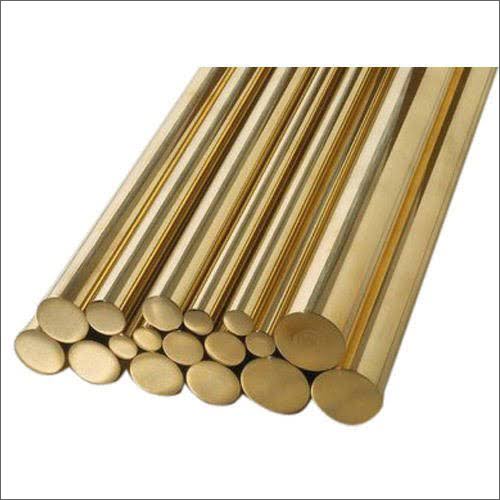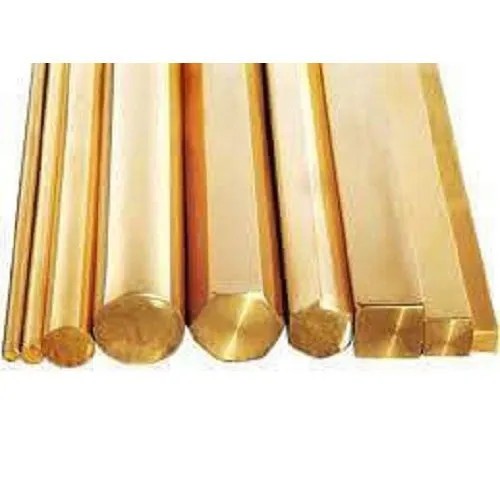
Brass, alloy of copper and zinc, of historical and enduring importance because of its hardness and workability. The earliest brass, called calamine brass, dates to Neolithic times; it was probably made by reduction of mixtures of zinc ores and copper ores.
JAAS offers a range of Hot Forged Headed Bolts & Nuts and bar turned / machined / stamped Fasteners and Fixing as per DIN / ISO / BS / ASTM / JIS / GOST / IS standard for various applications. All our Fasteners Confirm to International Specifications and have a very high thread quality. ‘Go’ and ‘Not go’ thread gauges are maintained throughout production and after plating.
We cater to various industries like Heating, Switches, Application, Furniture, Automobile, Transformers, Pumps, Motors, Marine, Telecommunication, Petrochemicals, and Control Panels etc. We are Leading Manufacturer of Brass fasteners, Automotive Fasteners, Industrial Fasteners, Aerospace Fasteners etc.
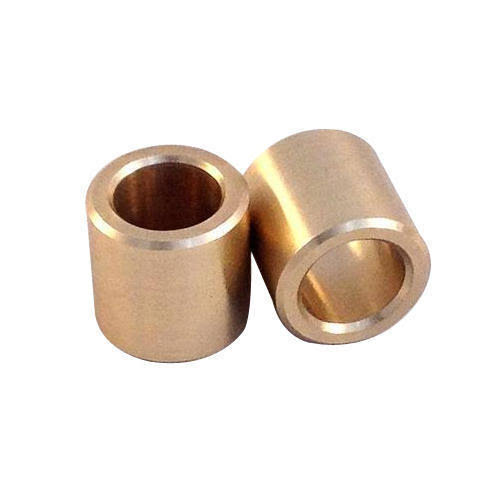
We manufacturer of Precision turned components in brass like Barrel, Screw, Hinges, Anchor etc.
Properties of Brass
As a copper-alloy, brass demonstrates many of the properties characteristic of copper. However, the alloy does exhibit a few distinct properties compared to pure copper and other copper alloys. For example:
- Susceptibility to stress-cracking. As brass is stronger and stiffer than pure copper, it is more susceptible to developing stress cracks.
- Malleability and formability. Compared to bronze, brass is more malleable. Additionally, it is easy to cast or work.
- High melting point. Brass has a melting point of approximately 900°C. The exact melting point differs based on the concentration of different metals in the alloy.
- Non-ferromagnetic. As brass is not ferromagnetic, it is much easier to process for recycling.
Depending on the additional metals added to the alloy, it can demonstrate varying characteristics, such as a variable melting point or greater corrosion resistance (due to the presence of manganese).
Available Grades of Brass
Brass is available in a variety of grades, each of which is characterized by the exact material makeup. At Sequoia Brass & Copper, we provide these six grades of brass:
- Alloy 260. Also known as cartridge brass, Alloy 260 demonstrates good cold working properties. It is suitable for use in ammunitions, automobiles, fasteners, and hardware.
- Alloy 272. This alloy—also referred to as yellow brass—consists of 33% zinc. It is typically used in industrial and architectural applications.
- Alloy 330. Brass alloy 330 is suitable for application where high machinability is critical. It contains a low lead content sufficient for cold-working and is commonly used to produce pipes.
- Alloy 353. Alloy 353 (also referred to as clock brass) is often used to fabricate precision components, such as clock and watch parts, because of its excellent machinability.
- Alloy 360. Also known as free cutting brass, this alloy is the most common type of brass. It exhibits excellent machinability and formability, as well as suitability for soldering and brazing operations. It commonly finds application in the manufacture of hardware components, fittings, valves, and fasteners.
- Alloy 385. Also known as architectural bronze this alloy can be used for construction & architectural applications. Alloy 385 is available in a wide variety of extruded & drawn shapes such as angles, channels, square tube, hand rail moulding & more.
- Alloy C48200 – C48500. Leaded naval brass meanto for machining. Typically available in rounds.
- Alloy 464. Alloy 464 (or naval brass) is known for its excellent resistance to corrosion from seawater across a wide range of temperatures. Additionally, it demonstrates suitability for hot forming and hot forming, as well as drawing, bending, heading, soldering, brazing, and welding.
Types of Brass
White brass
White brass contains more than 45% by weight of zinc and has little significance industrially. It is mainly used as a base for casting alloys and granulated for use in brazing and soldering consumables as it is too brittle for other applications.
Alpha brass
Alpha brasses generally contain less than 37% zinc. The microstructure of these brasses is a face centred cubic crystal structure which can be cold worked. Alpha brasses are used for the manufacture of items such as pins, bolts, screws, cold headed components, heat exchangers, fasteners, rivets and other machined parts.
Beta brass
Beta brass contains more zinc than alpha brass; over 45%. Beta brasses can only be hot worked and are less ductile but much stronger than alpha and alpha- beta brasses. These brasses have a body centred cubic crystal structure and are most usually used for the manufacture of castings for parts with complex shapes, water taps, ornamental fountains and water feature structures, and antique and architectural feature replication.
Alpha-beta
Alpha-beta or ‘duplex’ brasses contain between 37% and 45% zinc and are made up of both the alpha and beta grain structures. The balance of alpha and beta phase structure is altered by the zinc content. Alpha-beta brasses are harder, have lower cold ductility and more strength than alpha brass. Duplex brass is cheaper than alpha due to the higher zinc content but can be more prone to dezincification corrosion. Alpha beta brasses are suitable for use in the manufacture of hinges, architectural extrusions, gas appliances, radiator valves, taps and pipe fittings.
Phase Diagram and Mechanical Properties of the Brasses
The phase diagram and the mechanical properties of the different types of brasses are demonstrated in the following image.
Composition of Different Types of Brass Alloys
The composition of different types of brass alloys are outlined in the following table:
| UNS No | AS No | Common Name | BSI No | ISO No | JIS No | Copper % | Zinc % | Led % | Others % |
| C21000 | 210 | 95/5 Gilding metal | – | CuZn5 | C2100 | 94.0-96.0 | ~ 5 | < 0.03 | |
| C22000 | 220 | 90/10 Gilding metal | CZ101 | CuZn10 | C2200 | 89.0-91.0 | ~ 10 | < 0.05 | |
| C23000 | 230 | 85/15 Gilding metal | Cz102 | Cuzn15 | C2300 | 84.0-86.0 | ~ 15 | < 0.05 | |
| C24000 | 240 | 80/20 Gilding metal | Cz103 | Cuzn20 | C2400 | 78.5-81.5 | ~ 20 | < 0.05 | |
| C26130 | 259 | 70/30 Arsenical brass | Cz126 | Cuzn30as | ~C4430 | 69.0-71.0 | ~ 30 | < 0.07 | Arsenic 0.02-0.06 |
| C26000 | 260 | 70/30 brass | Cz106 | Cuzn30 | C2600 | 68.5-71.5 | ~ 30 | < 0.05 | |
| C26800 | 268 | Yellow brass (65/35) | Cz107 | Cuzn33 | C2680 | 64.0-68.5 | ~ 33 | < 0.15 | |
| C27000 | 270 | 65/35 wire brass | Cz107 | Cuzn35 | – | 63.0-68.5 | ~ 35 | < 0.10 | |
| C27200 | 272 | 63/37 Common brass | Cz108 | CuZn37 | C2720 | 62.0-65.0 | ~ 37 | < 0.07 | |
| C35600 | 356 | Engraving brass, 2% lead | – | CuZn39Pb2 | C3560 | 59.0-64.5 | ~ 39 | 2.0-3.0 | |
| C37000 | 370 | Engraving brass, 1% lead | – | CuZn39Pb1 | ~C3710 | 59.0-62.0 | ~ 39 | 0.9-1.4 | |
| C38000 | 380 | Section brass | Cz121 | CuZn43Pb3 | – | 55.0-60.0 | ~ 43 | 1.5-3.0 | Aluminium 0.10-0.6 |
| C38500 | 385 | Free cutting brass | Cz121 | CuZn39Pb3 | – | 56.0-60.0 | ~ 39 | 2.5-4.5 |
Corrosion resistance
Brass has ‘very good’ to ‘excellent’ corrosion resistance in most atmospheric and submerged applications. The addition of arsenic elevates its corrosion resistance properties making it suitable for sub soil, subsea, chemical processing and steam turbine use.
A superficial surface tarnish will naturally form on the surface of brass in external applications creating a protective green patina; the underlying brass will be unaffected by the patina and will not rust. To remove or inhibit the development of undesired patina, the brass can be polished by the usual manual and mechanical processes. The use of lacquer will also retard patina growth and preserve the initial natural colour of the brass.
Brass can also be successfully enamelled or plated with chromium, nickel, tin, silver and gold.